
BAX AV INSIGHTS
DESIGNING HYBRID EVENTS THAT ACTUALLY WORK
A successful hybrid event is more than a live stream. It has to connect the people in the room with those joining remotely — and make both audiences feel part of the same event.
A Successful Hybrid Event Is More Than a Live Stream
From the very start, a hybrid event strives to connect two audiences: the people in the room and those joining remotely — an increasingly common part of events and meetings post-COVID-19.
There’s more than meets the eye when it comes to a seamless hybrid production. It takes audio, camera coverage, presentation content, audience interaction, internet connectivity and technical event design into account, and goes far beyond adding on a simple stream at the last minute.
When hybrid events are planned properly, remote attendees don’t feel like they’re watching from the back row. They feel like they are part of the event and don’t experience the technical hurdles that can quickly become apparent if they are poorly managed.
Article Snapshot
Category: Hybrid Events & Streaming
Read time: 8–10 minutes
Best for: Conference organisers, corporate event teams, venues and event producers.
In this article
01. What Makes a Hybrid Event Successful?
02. Start With Your Audience
03. Great Audio Has to Work Twice as Hard
04. Don’t Just Point a Camera at the Stage
05. Design Presentations for Two Audiences
06. Make Participation Easy
07. The Live Experience Still Matters
08. Internet, Testing & Production Support
What Makes a Hybrid Event Successful?
A successful hybrid event should:
- Give in-person and remote audiences a balanced and equal experience
- Prioritise clear, consistent audio
- Use appropriate camera coverage rather than simply filming the stage
- Make presentations easy to follow on smaller screens
- Give remote attendees opportunities to participate
- Have reliable internet connectivity and a backup plan
- Test the technology before the event
- Have experienced technical production support on hand
While technology matters, it is only one part of the equation. The starting point should always be your audience and what you want them to experience.
Start With Your Audience, Not Your Tech
Technology enables hybrid events, but it shouldn’t drive the plan.
Before choosing cameras, microphones or streaming platforms, ask:
- Who will attend online?
- Why are they joining remotely?
- What do they need to see and hear?
- How will they participate?
- What parts of the event are most important for them to experience?
The answers will influence everything from the room layout and camera positions to the running order and the way presenters interact with the audience.
A conference with keynote presentations, panel discussions and audience Q&A, for example, will have very different production requirements from a company town hall or internal meeting.
The format should determine the technology, not the other way around.
Great Audio Has to Work Twice as Hard
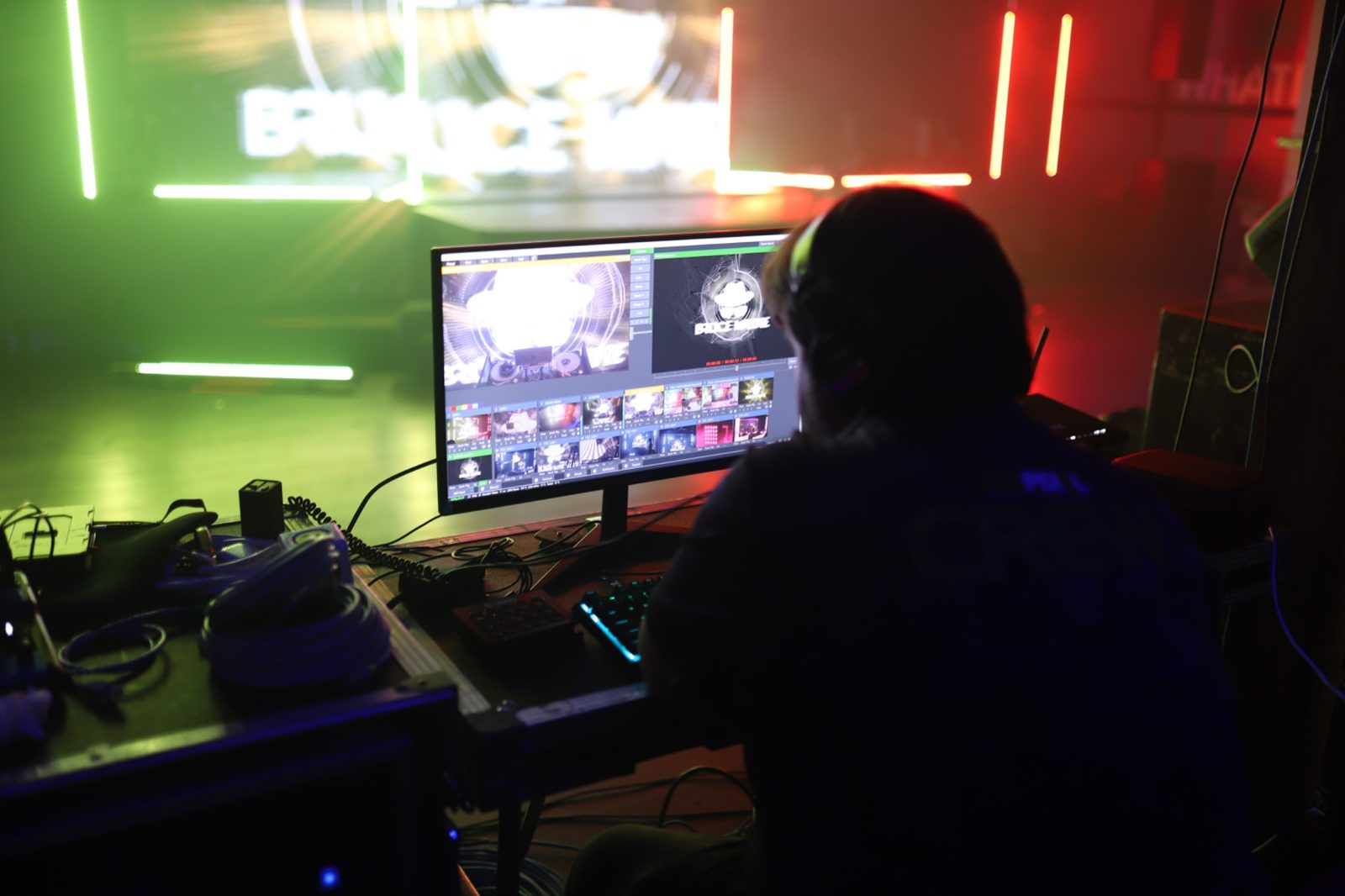
When you’re sitting in the room, a slightly imperfect camera angle probably won’t ruin your experience. Poor audio can.
Hybrid events make getting the sound right considerably more complex.
The online audience isn’t hearing the room. They’re hearing a carefully managed version of it. A presenter might sound clear through the venue’s PA while their voice is too quiet, uneven or drowned out by other microphones on the stream. An audience question that works perfectly well acoustically in the room can become almost impossible to hear online.
That’s why hybrid audio needs to be treated as its own production environment, not simply an extension of the room’s sound system.
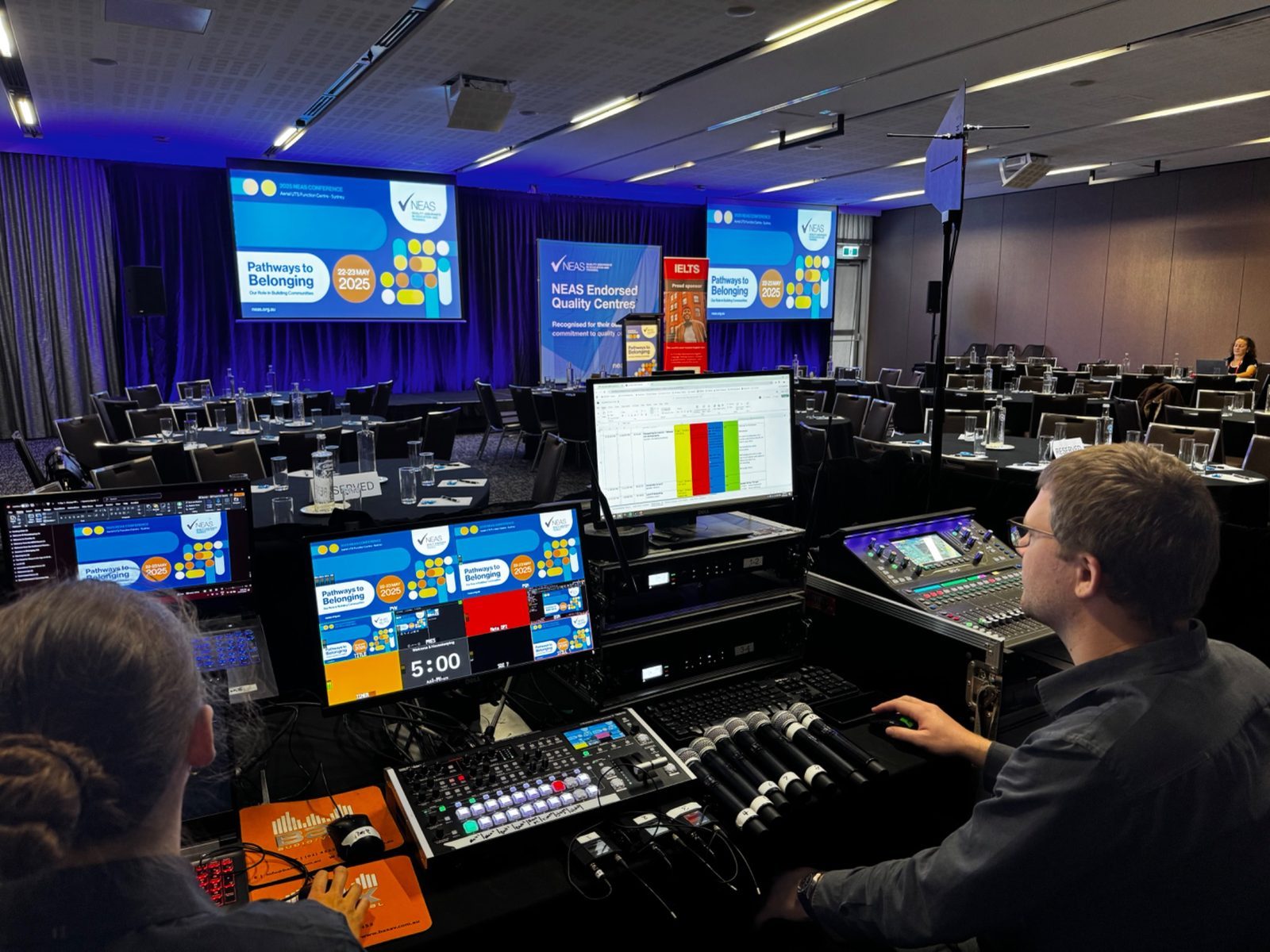
A professional production team is managing microphones, levels, mixing and monitoring in real time, while making sure the right audio reaches the right audience. That might mean one mix for the people in the room and another for those watching remotely.
Panels make this even more important. Multiple speakers, audience microphones, presenters moving around the stage and contributions from remote speakers all introduce variables that need to be managed without the audience noticing what’s happening behind the scenes.
And that’s really the measure of good hybrid production — the technology disappears and the conversation takes centre stage.
Good audio isn’t an online add-on. It’s what allows everyone, wherever they’re joining from, to feel like they’re part of the same event.
Don’t Just Point a Camera at the Stage
One static camera at the back of the venue can technically create a livestream. It doesn’t necessarily create a good hybrid event.
Remote attendees need to be able to follow what’s happening. Depending on the event, that might mean combining presenter close-ups, wider room shots, audience reactions, seamless presentation slides and other visual feeds.
Good camera coverage also helps create a more natural viewing experience. If a panel discussion is taking place, for example, showing the person speaking is far more engaging than leaving viewers looking at a wide shot of the entire stage.
The goal isn’t to make the event look like a television production for the sake of it. It’s to give remote attendees the visual information they need to stay engaged.
Design Presentations for Two Audiences
Presenters naturally focus on the people sitting in front of them. Without preparation, it’s easy to forget about the people watching online.
A few simple changes can make a significant difference:
- Encourage presenters to acknowledge remote attendees
- Repeat audience questions before answering them so online attendees can hear them
- Keep presentation slides clear and readable on smaller screens
- Build natural pauses for online questions and interaction
- Avoid relying on information that is only visible in the room
- Brief presenters on how the hybrid format will work before the event
- Do a run-through with presenters and production support so everyone understands their role and the flow of the production
A little preparation can make the difference between an online audience that feels included and one that feels like an afterthought.
Make Participation Easy
One of the biggest mistakes with hybrid events is giving remote attendees nothing to do except watch.
People are more likely to stay engaged when they have opportunities to contribute.
Depending on the event, this could include:
- Live Q&A
- Audience polling
- Moderated chat
- Digital networking
- Interactive workshops or chat rooms
- Shared whiteboards or collaborative tools
The important thing is to choose interaction that genuinely suits the event. You don’t need to add a poll simply because the technology allows it. If there is a meaningful question you want your audience to answer, giving both audiences a way to respond can make the event much more engaging.
The Live Experience Still Matters
Hybrid doesn’t mean sacrificing the live experience.
People who have travelled to attend an event in person have made a bigger commitment of time and money, so the physical experience still needs to be worthwhile.
Networking, demonstrations, breakout sessions and conversations that are difficult to replicate online can give people a reason to attend in person.
The best hybrid events don’t try to make the two experiences identical. Instead, they make each experience work in its own right while ensuring both audiences are part of the same event.
Reliable Internet Is Part of the Production
Streaming an event requires a stable internet connection with enough capacity to handle the production.
This is something that should be considered during the planning stage rather than discovered on event day.
Venue internet isn’t automatically suitable for live streaming. The production team should understand the available connection, what else will be using it and what backup options are available if something goes wrong.
Internet connectivity is just as much a part of hybrid event planning as microphones, cameras and screens.
Test Everything Before the Audience Arrives
Hybrid productions involve a lot of moving parts.
Presentation computers, microphones, cameras, streaming platforms, internet connections, confidence monitors, presentation clickers and other systems all need to work together.
A full technical rehearsal gives the production team an opportunity to test the complete setup before the audience arrives.
It also gives presenters a chance to understand how the event will work, where they need to be, what microphones they will use and how questions from remote attendees will be handled.
Testing isn’t the most exciting part of event planning, but it is one of the best ways to reduce problems and stress on the day.
“A livestream is a delivery method. A hybrid event is an experience.”
Audio
Professional audio is one of the most important elements of a successful hybrid production, and the online audience may need a different mix from the room.
Camera Coverage
Multiple, appropriate camera angles help remote attendees follow speakers, panels, audience reactions and presentation content.
Participation
Remote attendees need genuine opportunities to take part through Q&A, polling, chat and other interaction that suits the event.
Work With a Production Partner, Not Just an AV Supplier
Hybrid events require more than equipment.
They require planning, technical expertise and an understanding of how a live event and an online broadcast need to work together.
An experienced production partner can help determine the right approach for your event, identify potential technical issues and the ideal equipment before the event, and manage the production while you focus on your speakers, delegates and event objectives.
The technology should make your event easier, not become another thing you have to worry about.
The Takeaway
Successful hybrid events aren’t created by adding a livestream to a traditional conference. They’re created by considering both audiences from the beginning.
That means getting the audio right, providing appropriate camera coverage, designing presentations for remote viewers, creating genuine opportunities for participation and testing the complete production before the event begins.
When all of those elements work together, remote attendees don’t feel like they’re watching from the sidelines. They feel like they’re there.
Because streaming is only the delivery tool, the real challenge is creating an event experience that works for everyone, wherever they’re watching from.
If you’re planning a conference, meeting or corporate event with an online audience, Bax AV can help you design and deliver a hybrid production that works for everyone.
Frequently Asked Questions
What is a hybrid event?
A hybrid event combines an in-person audience with a virtual audience who participate online at the same time. Unlike a simple livestream, a hybrid event is designed to give both audiences a meaningful experience.
What is the biggest mistake organisers make with hybrid events?
Treating the online audience as spectators rather than active participants. Simply streaming an in-person event rarely provides enough interaction or engagement to keep remote attendees interested.
How do you plan a successful hybrid event?
Start by considering both audiences and what you want them to experience. Then plan the audio, camera coverage, presentations, audience interaction, internet connectivity and technical production around those objectives.
What equipment is needed for a hybrid event?
Depending on the event, this can include professional microphones and audio mixing, multiple cameras, video switching, presentation systems, screens, streaming equipment, reliable internet connectivity, lighting and technical operators. The right setup depends on the event’s size, format and objectives.
How do you keep virtual attendees engaged?
Give remote attendees opportunities to participate through live Q&A, polls, moderated chat, interactive sessions and other activities. The aim is to make them participants rather than passive viewers.
How much does a hybrid event cost?
There is no standard cost for a hybrid event. Factors include the number of attendees, venue, event duration, number of cameras, audio and presentation requirements, streaming requirements, internet connectivity and technical support. The best approach is to determine what the event needs to achieve first, then build the production around those requirements.
What is the difference between a hybrid event and a livestream?
A livestream broadcasts an event to an online audience. A hybrid event is designed around both physical and remote audiences and gives both opportunities to participate. Put simply, a livestream is a delivery method. A hybrid event is an experience.
Why is professional audio so important for hybrid events?
Remote attendees will quickly disengage if they can’t hear presenters, panel discussions or audience questions clearly. Professional microphones, audio mixing and monitoring help ensure consistent sound for both audiences.
Do hybrid events require professional AV support?
The level of support depends on the size and complexity of the event. For larger conferences, multi-camera productions, live streaming and events with significant remote audiences, experienced technical production support can help ensure all the different elements work together reliably.
Planning a Hybrid Event?
Talk to Bax AV about hybrid conference production, live streaming, camera coverage, audio, audience interaction and technical planning for your next event.
Planning An Event?
Tell us about your event and we’ll prepare a tailored production proposal.
Event Budget Estimator
Get an indicative production budget
Answer five quick questions and we’ll generate a starting budget range for your event.
Where is your event?
What type of event are you planning?
How many delegates?
How many event days?
Production Finish
Choose the level of production finish you're aiming for. We'll fine-tune the details with you once we understand your event.
Most conferences and corporate business events.
Your indicative range is ready
Enter your details to view your indicative range. This is a planning guide only — the Bax AV team can help refine the details once we understand your event properly.
Thanks — your estimate is ready.
This indicative range is now shown above. It has also been captured for the Bax AV team so we can help refine the details with you.