
BAX AV INSIGHTS
WHAT NO ONE TELLS YOU ABOUT AV BUMP-INS
Venue access, timing traps and the power issue that can derail your show before the audience arrives.
In the calm before a conference kicks off, there is often a storm of work happening behind the scenes.
Screens are being tested. Audio is being tuned. Lighting is being focused. Cables, cases, crew and venue teams are all moving at once. This is the AV bump-in, and while it may sound like a simple setup window, experienced planners know it can make or break the show.
Bax AV has managed hundreds of AV bump-ins across Australia, from hotel conference rooms to major event spaces. The biggest risks are often the ones clients did not know to ask about: access, timing, supplier clashes, power and communication.
Here is what every event planner should know before the first case comes off the truck.
Article Snapshot
Category: Event Planning & Conference Production
Read time: 6–8 minutes
Best for: Conference organisers, venues, producers and event teams.
In this article
01. Venue access traps
02. Why the run sheet is not enough
03. Power planning
04. Crew logistics
05. Communication and timing
06. How early AV planning protects the show
1. Venue access is not always what you think it is
Just because the room is booked from 6am does not always mean the AV team can roll in at 6am. Access points may be shared with catering, venue staff, cleaners, brand teams, furniture suppliers and other event crews.
That is why it is crucial to meet with your AV team early, not just to discuss equipment, but to align on power requirements, docking procedures, lift access and setup logistics. Early collaboration gives the team time to plan around restrictions before the day becomes a countdown.
“Hotels often give external AV teams tight bump-in windows, which means you need a crew that can set up fast, problem-solve on the fly and still deliver a flawless experience under pressure. We have also turned up at venues that technically gave us access at 6am for an 8am mic check. That kind of access puts serious pressure on the entire production schedule.” — Dale Bax, Owner, Bax AV
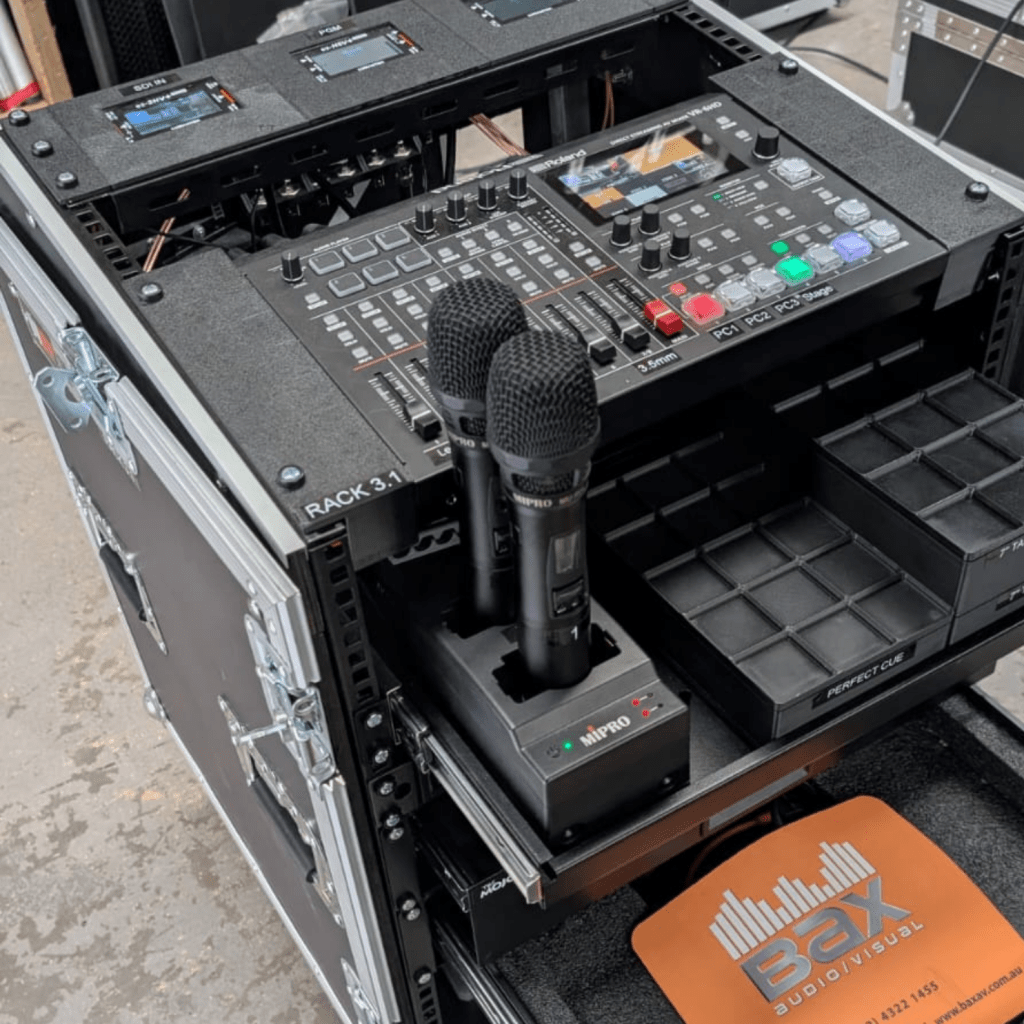
To counter this, we use custom-made racks with built-in microphones, laptops, switchers, timers and pro clickers designed to support shorter setups and adapt to last-minute changes.
2. The run sheet is not a bump-in plan
Too often, AV gets treated as a final line item on a run sheet: a tick-box after floor plans, branding, catering and table placement. But a proper bump-in needs its own micro-plan, built in close collaboration with your AV team from the start.
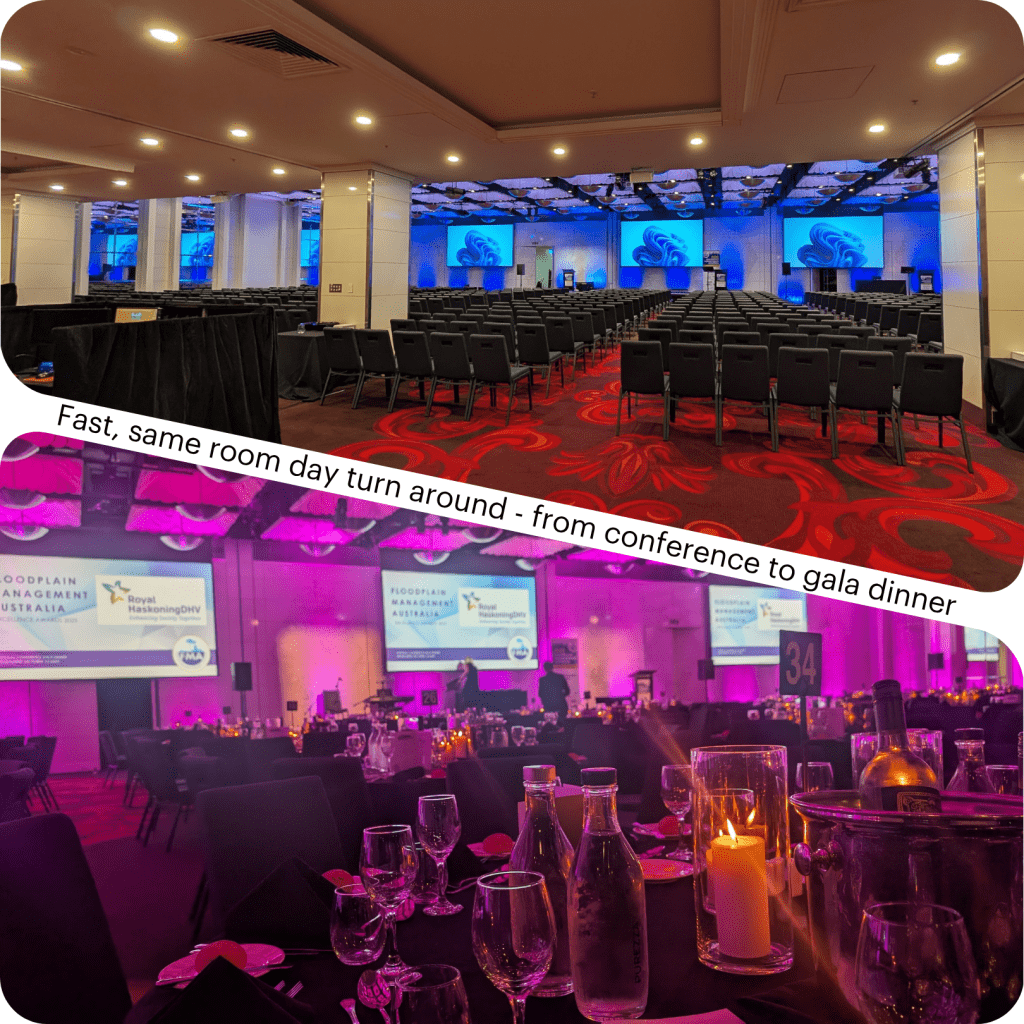
Today’s events are rarely simple. Same-day room turnarounds from a conference session to a gala dinner, or multiple breakouts to an interactive workshop, mean your AV team must plan exactly when equipment arrives, what rigs go up, who is testing audio and where lighting is focused.
Miss key access windows or underestimate rigging time, and the entire production risks falling behind before the show has even begun.
“The Bax AV team worked with us from the very start of our planning. They helped us realise we needed a full AV timeline, not just a line in our event run sheet. They helped us avoid a clash with another supplier we had not even considered. An absolute game-changer.”
3. The power of decent event planning
One of the biggest oversights in event planning is power.
One of the most overlooked risks in event production is assuming the venue’s power setup can handle the full show load.
On major shows, the AV system may be running high-output LED walls, full PA rigs, intelligent lighting, live broadcast gear and control systems. Then catering arrives and needs additional power. Suddenly, suppliers are sharing distribution boards, circuits are overloaded and the risk of a trip increases.
Power should never be treated as just a venue detail. It is a critical part of production design. That is why Bax AV discusses, verifies and plans power requirements before the event, using protected paths and industrial-grade distribution where required.
“We never just take a venue’s word on power; we discuss and verify it. Our pre-conference checks catch issues early and our three-phase racks give us clean, independent distribution. It means we are ready to power the full show without compromise.” — Dale Bax, Owner, Bax AV
Bring your AV team in early, or pay for it later
A professional AV partner will not just plug things in. They will guide you through what is needed, flag what is missing and make sure nothing critical is left off the table. It is the difference between meeting expectations and blowing them.
Bring your AV team in early, treat them like part of the planning, not a line item, and the whole show runs smarter.
4. Crew logistics matter more than you think
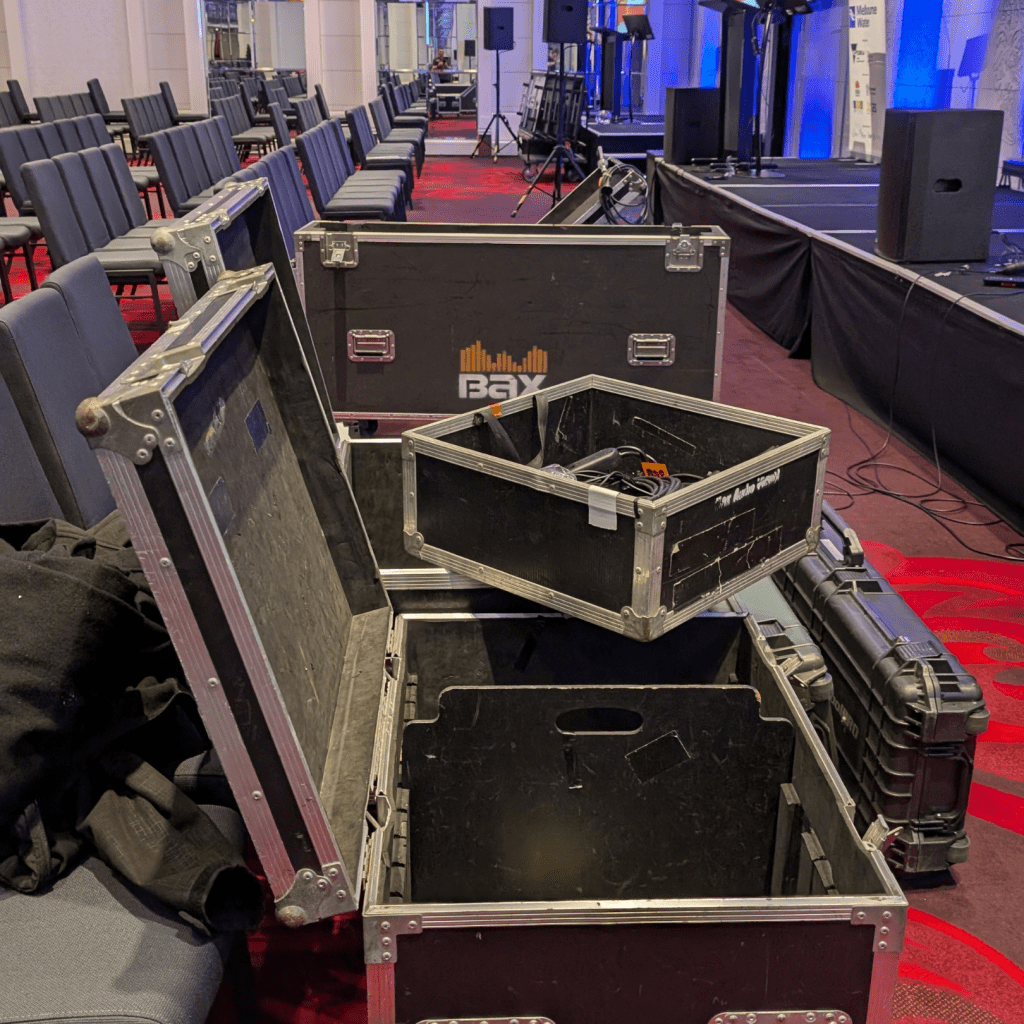
How is the gear getting in? Where is the loading dock? Is there lift or ramp access? Can the crew get into the space quickly, or are they navigating tight corridors, shared docks or venue delays?
These are not minor details. They directly impact how quickly and how well your AV team can deliver. Lost time in the first hour of bump-in has a knock-on effect across the entire production schedule.
We have turned up to venues with blocked loading zones, out-of-service lifts and power boards hidden behind locked doors. Every one of these things burns time, and when the countdown is tight, that matters.
A supported crew is a switched-on crew. When logistics are clear, access is smooth and the power setup is known and tested, AV can focus on delivering the show, not chasing cables and lost time.
5. Communication beats spec sheets, every time
You can have the most detailed tech specs in the world, but without early and open communication with your AV partner, it is easy to miss the mark. When AV teams are brought in late, critical details often get overlooked and you may end up with equipment that ticks boxes but does not deliver the impact you are after.
We always recommend looping in your AV partner from day one.
“When we are part of the process from the start, we are not just ticking off requirements; we are helping shape and build a better event from the very start. From venue suitability and load-in timelines to stage layouts that save time and budget, being involved early lets us support you where it counts.” — Dale Bax, Owner, Bax AV
Why it matters
The AV bump-in is one of the most underestimated moments in any event, yet it sets the tone for everything that follows. Tight venue access, mismatched power supply, missing micro-plans and late communication can throw even the best-run event off course.
Early access can often be negotiated before contracts are signed. Bringing your AV partner in from the very start of your planning helps secure these critical windows and reduces the risk of surprises on the day.
These are not extras. They are essential for delivering a calm, smooth and stress-free event.
Practical Insight
A bump-in needs its own plan. Access, lifts, loading docks, power and supplier timing should be confirmed before event day.
Event Impact
When bump-in is rushed or unclear, the pressure flows into rehearsals, speaker checks, room turns and the audience experience.
Bax AV Approach
We plan the real-world logistics around the show, not just the equipment list, so the event starts calm, controlled and ready.
Planning your next event?
If you are tired of last-minute tech issues, rushed setups or unclear plans, talk to the team at Bax AV. We will collaborate with you from the start and help map out an audio-visual plan that is not just about lights and cables, but about setting your show up for success.
That means working with the venue, planning the technical timeline, understanding supplier movements and helping avoid the problems that only show up when the clock is already ticking.
Let’s talk about how to make your next AV bump-in the smoothest one yet.
Planning an Event?
Talk to Bax AV about conference production, gala dinners, hybrid events, venue support and technical planning.
Planning An Event?
Tell us about your event and we’ll prepare a tailored production proposal.
Event Budget Estimator
Get an indicative production budget
Answer five quick questions and we’ll generate a starting budget range for your event.
Where is your event?
What type of event are you planning?
How many delegates?
How many event days?
Production Finish
Choose the level of production finish you're aiming for. We'll fine-tune the details with you once we understand your event.
Most conferences and corporate business events.
Your indicative range is ready
Enter your details to view your indicative range. This is a planning guide only — the Bax AV team can help refine the details once we understand your event properly.
Thanks — your estimate is ready.
This indicative range is now shown above. It has also been captured for the Bax AV team so we can help refine the details with you.